Some Truth About Visual Storytelling
Storytelling, of whatever kind, seems to have become one of the buzzwords in recent years. It is popular in almost every professional corner, whether it’s business, science, counseling, media, or the arts. But storytelling is definitely more than a trend. After all, it has been around since the beginning of humankind. This is not surprising because it is an extremely powerful mode of communication, especially in visual form. Storytelling can be a means to unite, and keep together, large numbers of people — think about how it drives world religions, for example — and it can be used to do either good or bad.* This is concerning because a compelling story is not necessarily a true story. As we know by now, false narratives can mislead similarly large numbers of people, and potentially disrupt society. We have seen this happening in the past and we see it happening right now. And this time around, the impact of false narratives is amplified by the dynamics of social media and generative AI. So, more than ever, the power of storytelling comes with great responsibility. Visual storytelling is no exception in that regard.
A compelling story is not necessarily a true story.
As far as I’m concerned, taking responsibility already starts on a small scale. This made me think recently, when I posted a series of photos on Instagram that could convey an unrealistic impression of a scene to viewers who don’t know that scene. The photo below is part of this story, which is about an apparently isolated chapel. It suggests that the chapel is situated in a vast, rural landscape of meadows, fields, and woodlands. This is not the case, however. In fact, the chapel is located in a small patch of countryside (less than a kilometer wide) that is surrounded by large industrial and urban areas: see the Google map below the photo. While I enjoyed shooting the scene as if it were the idyll that the photo suggests it to be, I decided to give full disclosure of its actual setting in my Instagram post.
Of course, it depends on your intentions as a photographer — as well as the size of your audience — whether you should disclose the broader context of your photographs. For example, if your visual story is intended as a piece of art that transcends reality, it is fine not to reveal anything beyond the photographs themselves. However, if your aim is to document a place, then the story should probably contain all relevant facets of that place. Whatever the intentions, it is good to realize that photographs tell stories that remain within the limits of their frames. Only the photographer can tell what’s outside of those frames.

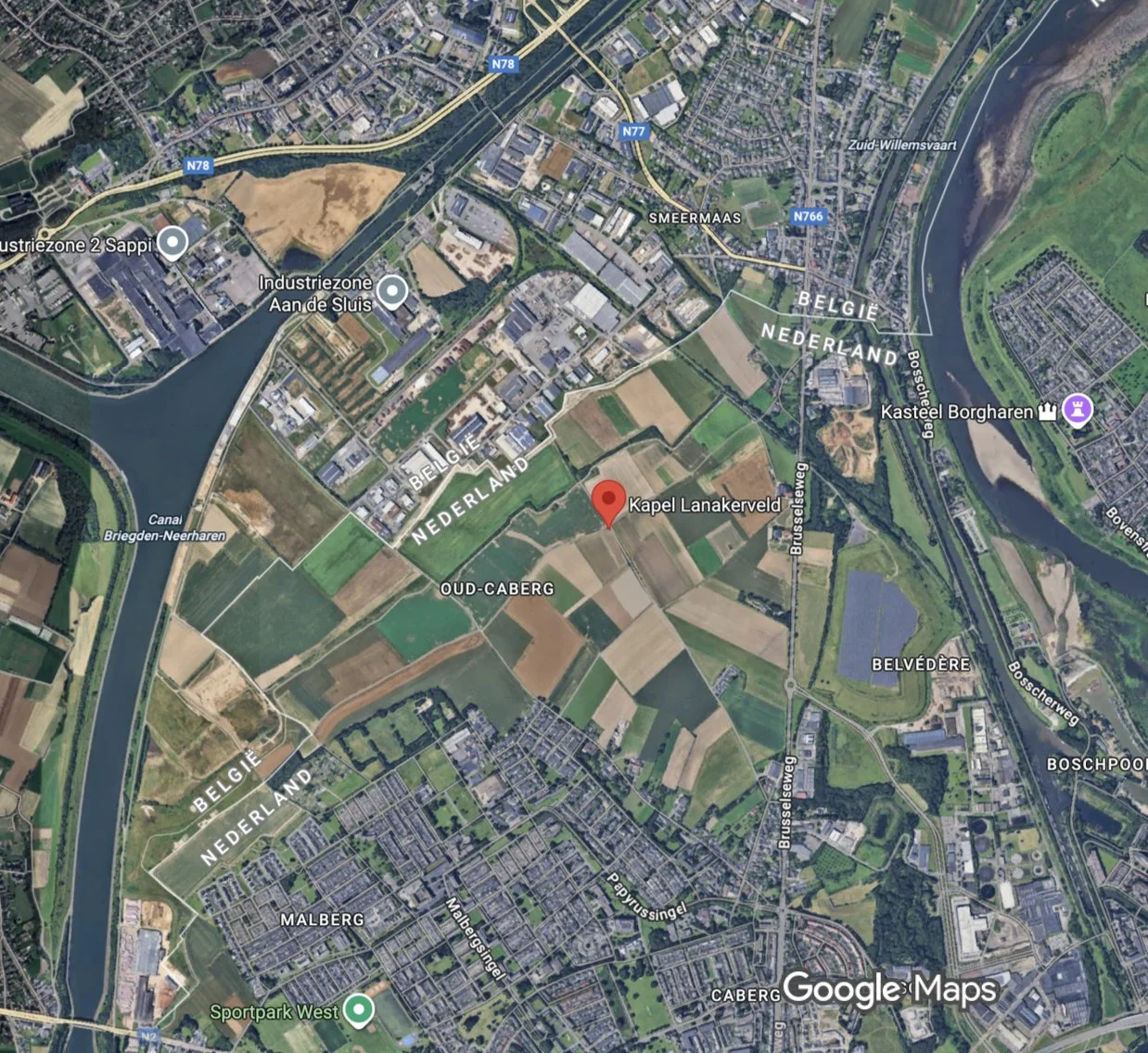
This photograph is one of a series about an apparently lonely chapel. It suggests that the chapel is surrounded by vast stretches of meadows, fields, and woodlands. However, the Google map shows that this is far from the truth. The location of the chapel is indicated by the red marker.
*If you want to read more about the power of storytelling and its impact on human history, then I can wholeheartedly recommend Yuval Noah Harari’s enlightening book, Sapiens: A brief history of humankind. There’s good reason why this book has become a modern classic.